A Song to Remember
This week, we read Parshat Haazinu.
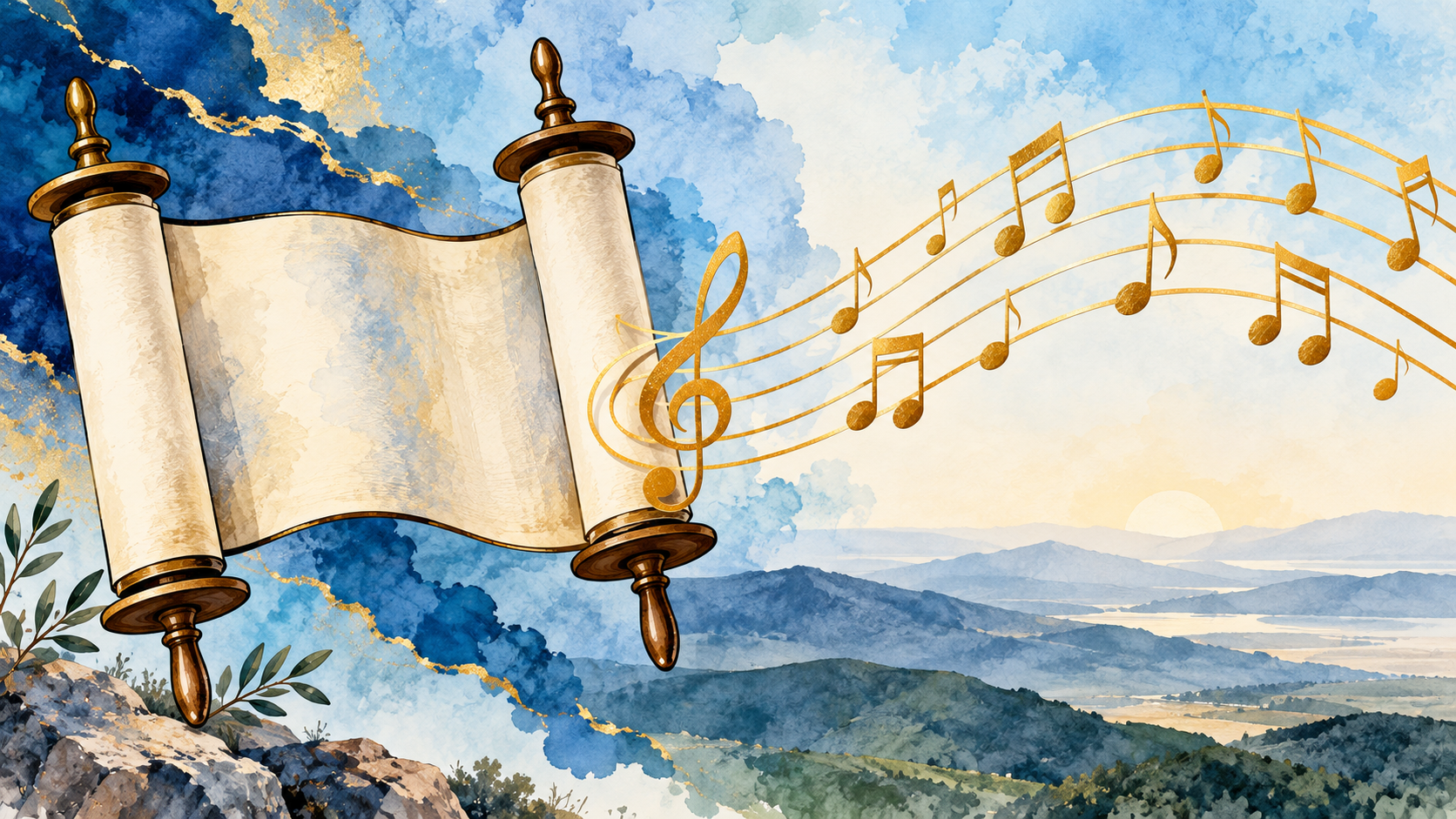
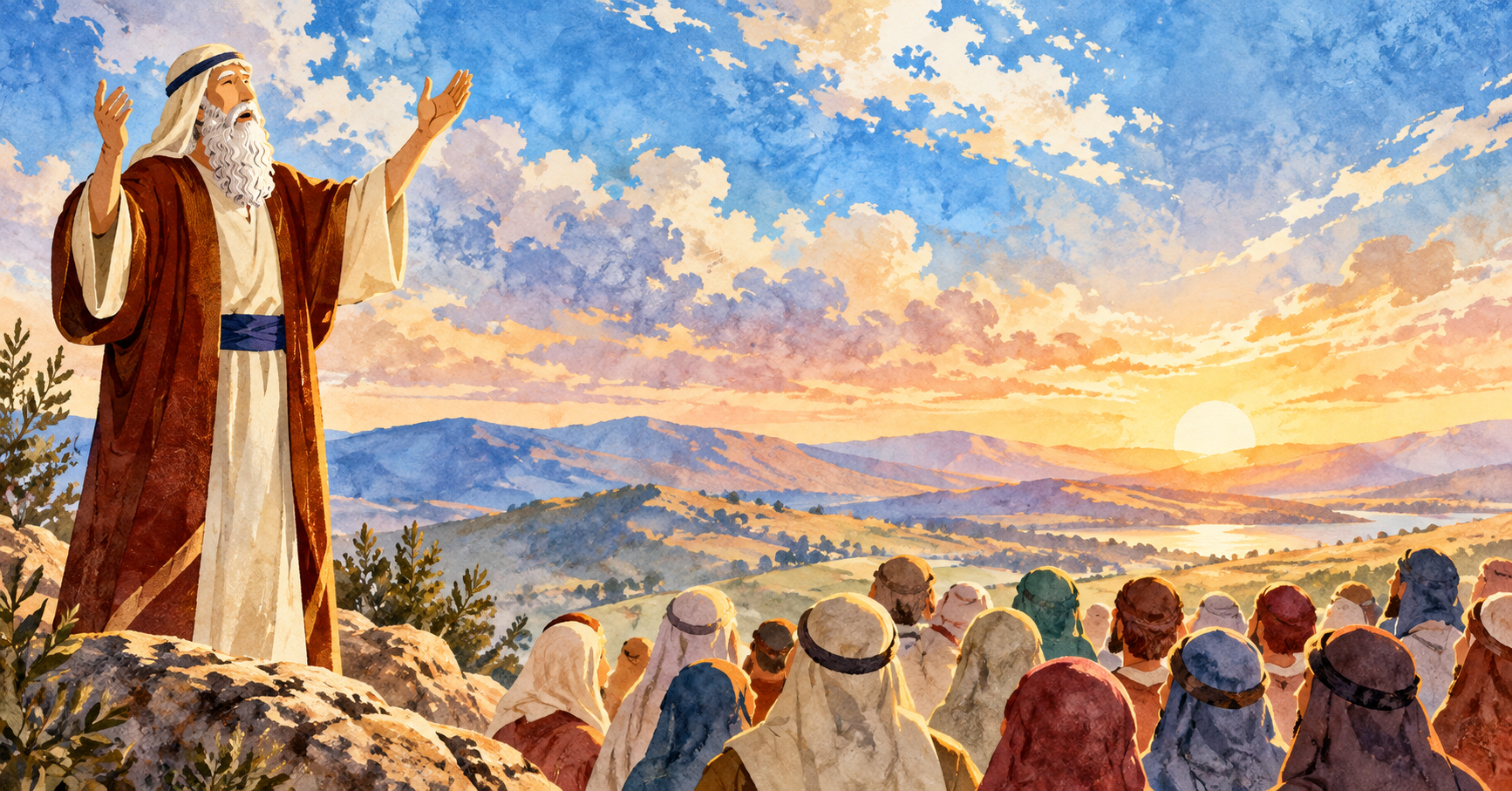
The greater part of the Torah reading consists of a 70-line “song” delivered by Moshe to the Jewish people on the last day of his earthly life.
Calling heaven and earth as witnesses, he exhorts the people, “Remember the days of old / Consider the years of many generations / Ask your father, and he will recount it to you / Your elders, and they will tell you” how G‑d “found them in a desert land,” made them a people, chose them as His own, and bequeathed them a bountiful land. The song also warns against the pitfalls of plenty and the terrible calamities that would result, which are described as G‑d “hiding His face.” Yet in the end, he promises, G‑d will avenge the blood of His servants and be reconciled with His people and land.
The Parshah concludes with G‑d’s instruction to Moshe to ascend the summit of Mount Nebo, from which he will see the entire land of Israel, before dying on the mountain.
The Shabbat of Return
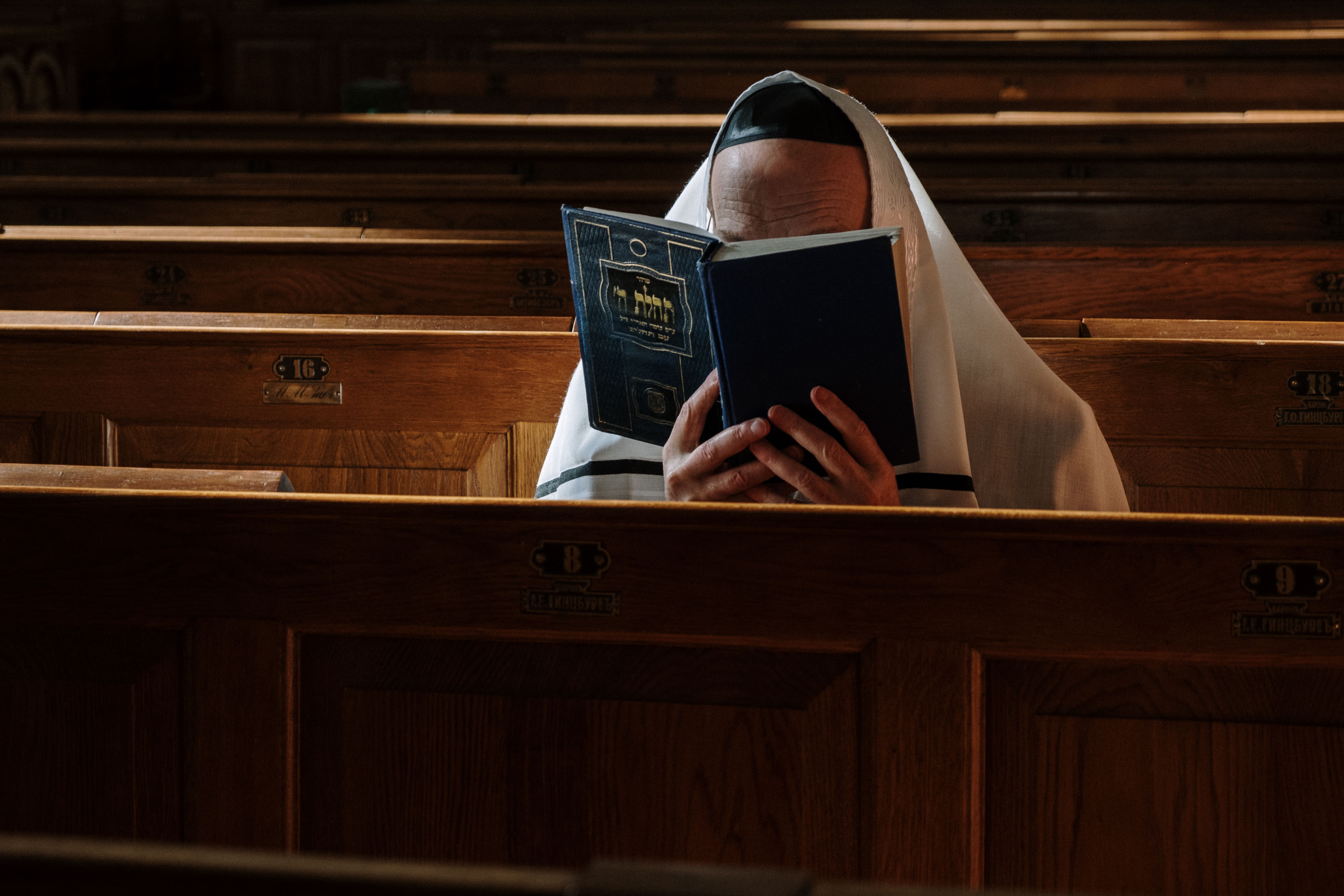
The Shabbat between Rosh Hashanah and Yom Kippur is called Shabbat Shuvah, Shabbat of Return because its special haftarah reading begins with the words Shuvah Yisrael "Return O Israel.” It is also referred to as Shabbat Teshuvah because it falls during the Ten Days of Repentance.
The prayer service on this Shabbat is the same as on an ordinary Shabbat except for the additions that are made to the Amidah throughout the Ten Days of Repentance. Avinu Malkenu is not recited.
It is customary in almost all Jewish communities for the rabbi of the city or congregation to expound on teshuvah, and to emphasize the severity of transgression so that the people turn their hearts toward repentance.
The Shabbat was given to Israel as a time for Torah study and prayer, and, although one should always take care not to pass the time idly or in inappropriate conversation, on Shabbat Shuvah one should be especially careful to concentrate entirely on Torah, prayer, and reflection on repentance, thereby attaining forgiveness for whatever unfitting behavior may have marred other Shabbats.
Speak to the Heart
This week's Torah reading starts with the statement "Listen, O heavens, and I will speak; may the earth hear the words of my mouth."
Two different Hebrew words are used for what, at first glance, is the same idea. Regarding the heavens, the verse says ha'azinu, literally "give ear"-- pay heed, listen up, take note, etc. Regarding the earth, the verse uses the word v'tishma, meaning "it shall hear." The commentators mention that this difference is based on the different "customers." When it comes to the heavens (from whom our expectations are naturally higher) a harsher tone is used; whereas regarding the more vulnerable earth the somewhat softer "it shall hear" is used.
As we have noted before, there is a concept that "words which come from the heart... enter the heart." In other words, when we speak sincerely and target our words correctly, they will be well received. Conversely, if we find that our words are not being well received, it is a sign that something is wrong in our delivery and approach.
We find this lesson in this week's parshah. When Moshe is addressing the heavens and the earth, he adopts an appropriate tone of voice, depending on who he is dealing with.

When Light Fills Everything
What was the wonder of the Exodus?
That an infinite, unbounded light broke its way into a dark, tightly bounded world.
What will be the wonder of the future, when that light will shine in every corner, perceived by every eye?
That there is a world.
To us, then, there will be no greater wonder.

There Will Be a Harvest
We were a group of about twenty young people—all counselors in Bnei Akiva, all educated in the Jewish schools of Mexico. I was a leader of this group. It was 1954 when we arrived in New York, and we were taken into the Rebbe’s office. He sat at his desk, and we were seated in front of him. He invited me to approach, and he requested a list of all the students’ names. Of course, I had it prepared.
As I handed it to him, I looked at him. The expression on his face was so warm, so radiant, so caring. I will never forget it. He immediately won me over. Then he asked, “What would you like to discuss? Do you have a specific question?”
I said, “I am a youth counselor in Bnei Akiva, as are all the members of this group. We are returning to Mexico shortly to serve as counselors for another year or two until we move to Israel. In our work we invest all our efforts, all our strength, into the Jewish child. But then the kids leave us. Not only do they leave Bnei Akiva, but they also leave the entire atmosphere of the Jewish community.
“Some of the boys even marry non-Jewish women, or the girls marry non-Jewish men, and they abandon Judaism totally. Our question is: Where do we draw the strength to deal with all this?”
The Rebbe looked at me and at the entire group, and he said: “I understand you all, and I will try to tell you how to approach this issue. The verse in Psalms states: ‘Those who sow with tears will reap with joy.’ This means that if someone ‘sows with tears,’ with his whole heart, then whatever he wants to accomplish—in the field of Jewish education, in sharing the light and warmth of Judaism—if he does so with all his heart, he ‘will reap with joy.’
“There will be a harvest. But there’s no guarantee that the one who sowed will see the harvest. The harvest will certainly take place, although you may not see the results.”
And then the Rebbe explained his point by telling us a story, and this story has been with me to this day. Although sixty years have passed, I will never forget this.
He said, “Let’s take an example: You’re sitting on a Shabbat afternoon speaking to your group . . . you’re delivering a talk, and a Jewish boy walks by the synagogue where your meeting is being held. He doesn’t know what Bnei Akiva is, or what exactly you are doing there. But out of curiosity, he comes in, sits in the corner, and listens. You don’t want to cut your speech short in the middle, so you figure: ‘At the end of the speech I’ll go over to him, I’ll ask him who he is and encourage him to join in.’
“And what are you speaking about? You’re explaining that we are the children of our forefather Abraham, and this gives us—and the entire Jewish people—uncommon strength. The fact that Abraham believed in G‑d gives us the strength to put all our trust in Him, and it gives us the desire to perform His will and keep His mitzvot. This is what makes us the Jewish people.
“And this has kept us going for thousands of years, to this day.
“The boy hears what you are saying, but he decides not to stay until the end. He gets up and leaves. You didn’t get a chance to approach him. You don’t know who he is, and he doesn’t know who you are. He leaves and continues on his way.
“Later on, he studies in college, meets a non-Jewish girl, falls in love with her, and decides to marry her. But her parents make a condition: ‘You can marry our daughter only if the wedding is held in a church.’ He agrees.
“They’re on their way to the church, and they are coming closer and closer. Suddenly the boy looks up and sees the crucifix atop the church. And he thinks to himself, ‘Just a moment! How can I go in there? How can I be part of this? I recall once hearing . . .’
“He doesn’t remember where he heard it, or from whom. All he remembers is that he once heard: ‘We, the Jews, are descendants of Abraham, Isaac and Jacob, and this obliges us to continue the tradition. This is why the Jewish nation lives and survives to this day.’ He thinks: ‘How can I go now and erase all this? I can’t!’
“And then, at the last moment, he tells them: ‘I’m very sorry. I can’t go through with this wedding.’ He leaves them, goes back, and seeks out his Jewish roots.
“He doesn’t know where he heard the words that changed his life at the crucial moment, and you don’t know to whom you spoke that day when he wandered in.
“But there is a harvest.”
He then looked at us and said, “You must each invest your fullest effort into Jewish education. You are assured that something good will come of it, although you might not necessarily merit to see it.”