Twins, Conflict, and a Blessing
The name of this weeks Parsha is Toldot. Yitzchak and Rivkah endure twenty childless years, until their prayers are answered and Rivkah conceives.
She experiences a difficult pregnancy as the babies inside her are very active. Hashem tells her that there are two opposing nations in her womb.
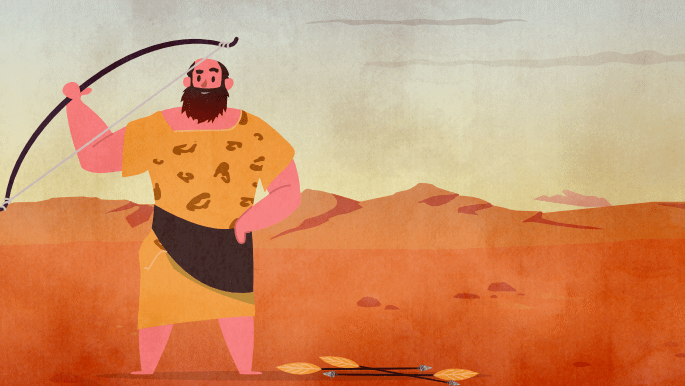
Esav is born first; Yakov is born clutching Esav’s heel. Esav grows up to be a hunter while Yakov learns Torah. Returning exhausted and hungry from the hunt one day, Esav sells his birthright to Yakov for a pot of red lentil stew.
Yitzchak grows old and blind, and wants to bless Esav. Rivkah dresses Yakov in Esav’s clothes, covers him with goatskins to simulate the feel of his hairier skin and sends him to his father. Yakov receives his father’s blessings. When Esav returns and is furious.
Yakov leaves home for Charan to flee Esav’s wrath and to find a wife in the family of his mother’s brother, Laban.

A Rebbe Who Shaped Chassidus
Kislev 9 is both the birthday and day of passing of Rabbi DovBer of Lubavitch, son of and successor to the founder of Chabad Chassidism, Rabbi Schneur Zalman·of Liadi. Rabbi DovBer was known for his unique style of "broadening rivers" -- his teachings were the intellectual rivers to his father's wellspring, lending breadth and depth to the principles set down by his father.
Born in Liozna, White Russia in 1773, Rabbi DovBer was named after Rabbi Schneur Zalman's mentor and teacher, Rabbi DovBer of Mezeritch. Rabbi DovBer assumed the leadership of Chabad upon his father's passing in 1812. In 1813 he settled in the town of Lubavitch, which was to serve as the movement's headquarters for the next 102 years. In 1826, he was arrested on charges that his teachings threatened the imperial authority of the Czar, but was subsequently exonerated.
Rabbi DovBer passed away on his 54th birthday in 1827, a day before the first anniversary of his liberation.
A Shliach Who Refuses to Stop
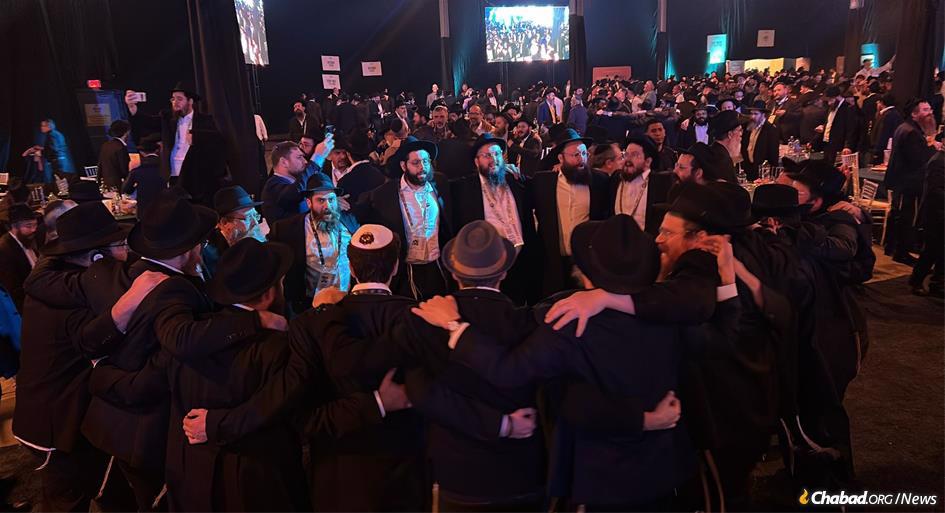
This past Sunday was the annual global convention for the Rebbes emissaries around the globe. The number of “shluchim” grows yearly and this year added up to an incredible 6233. These Rabbis were sent either by the Rebbe, or by representatives to light up even the most distant corners of the world.
One such a Rabbi who spoke was Rabbi Liraz Zeira. A Rabbi who recently lost his legs while fighting in Syria. He spoke about how he was always active in holy work. And now that he can no longer walk, instead of letting that stop him, he flies.

Truth Always Rises
The entire existence of the world is based on the idea of Moshiach. Even those that appear to oppose Moshiach only do so on an external level. When we uncover their inner truth, which is Geulah, the external opposition falls away and becomes nullified.

A Lesson in Humility
Once, when Rabbi DovBer of Lubavitch, the son of Chassidic master Rabbi Schneur Zalman of Liadi, was a young man, he was visiting with his father-in-law in Yanovitch. There he met with one of his father's chassidim. The chassid noticed that the young "Rebbe's Son" was all too aware of his achievements in scholarship and meditative prayer, and felt that some "cutting down to size" was in order.
Said the chassid to Rabbi DovBer: "Considering who you are and how you've lived, what's the big deal? Your father — well, we all know who your father is. You were certainly conceived under the holiest of circumstances, and I'm sure that your father secured a most lofty soul to bring down into the world. Then you were raised in a rebbe's home and great care was taken to mold your character and safeguard you from any negative influences. All your life you've been exposed to scholarship and sanctity, and to this very day you're preoccupied only with the study of Torah and the teachings of Chassidism. So you've amassed a certain amount of knowledge and you pray with fervor and devotion. Big deal.
"Now, take me, for example. My father was a simple man, and we can well imagine what was on his mind when he scraped out some dreg of a soul from the bottom of the barrel. My upbringing? I was raised as a goat and basically left to my own devices. And do you know what I do with my life? Let me tell you how I earn my living. I loan money to the peasants during the planting season and then, during the winter months, I make my rounds of their villages and farms to collect the debts before they have a chance to squander their entire harvest on vodka. This means setting out several hours before sunrise, well before the permissible time for prayer, equipped with a flask — for without a drink one cannot begin to talk business with a peasant. After drinking to his health, one must share a l'chayim with the woman in the house as well — otherwise she can ruin the whole deal for you. Only then can you sit down to settle part of the account.
"After three or four such stops I make my way home, immerse myself in the mikveh and prepare for prayer. But after such preliminaries, what sort of prayer would you expect...?"
The words of this chassid, who was, in truth, renowned for his refined nature and soulful prayers, made a deep impression on Rabbi DovBer. The young man immediately traveled home to his father and poured out his heart. He bewailed his spiritual state, saying that his service of G‑d is worthless, falling so short of what is expected from him.
The next time the chassid from Yanovitch came to Rabbi Schneur Zalman, the Rebbe said to him: "I am most grateful to you. You have made a chassid out of my Berl."