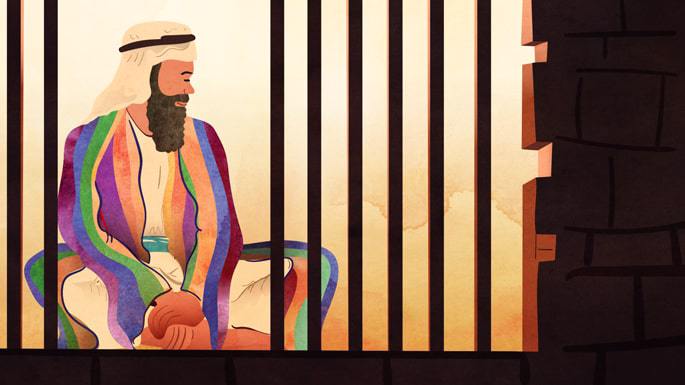
Dreams That Divide
This week we read Parshat Vayeishev.
Yakov settles in Hebron with his twelve sons. His favorite is Yosef, whose brothers are jealous of his special treatment, such as a precious coat that Yakov made him. Yosef relates to his brothers two of his dreams which foretell that he is destined to rule over them, increasing their hatred towards him.
His brothers throw him into a pit. While in the pit, Yehuda has him sold to a band of passing Ishmaelites. The brothers dip the special coat in the blood of a goat and show it to their father, leading him to believe that his most beloved son was killed.
Yosef is taken to Egypt and sold to Potiphar, a minister. G‑d blesses everything he does, and soon he is made overseer of all his master’s property. Potiphar’s wife desires the handsome lad; when Yosef rejects her, she tells her husband that he tried to force himself on her and has him thrown into prison. Yosef gains the trust and admiration of his jailers.
In prison, Joseph meets Pharaoh’s chief butler and chief baker, both incarcerated for offending their royal master. Both have disturbing dreams, which Joseph interprets; in three days, he tells them, the butler will be released and the baker hanged. He asks the butler to intercede on his behalf with Pharaoh. The predictions are fulfilled, but the butler forgets all about Yosef and does nothing for him.
Chanukah: Light Against Power
On Sunday night begins the holiday of Chanukah.
In the second century BCE, the Holy Land was ruled by the Seleucids (Syrian-Greeks), who tried to force the Jewish people to accept Greek culture and beliefs instead of mitzvah observance and belief in Hashem. Against all odds, a small band of faithful but poorly armed Jews, led by Judah the Maccabee, defeated one of the mightiest armies on earth, drove the Greeks from the land, reclaimed the Beit Hamikdash in Jerusalem and rededicated it to the service of G‑d.
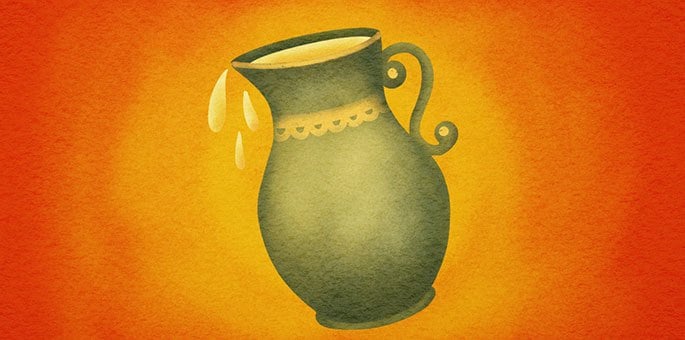
When they sought to light the Temple's Menorah), they found only a single cruse of olive oil that had escaped contamination by the Greeks. Miraculously, they lit the menorah and the one-day supply of oil lasted for eight days, until new oil could be prepared under conditions of ritual purity.
To commemorate and publicize these miracles, the sages instituted the festival of Chanukah where we light the menorah, eat fried foods like donuts and latkes and spread light for eight days.
Teaching Generosity Early
During Chanukah it is customary to give gelt (money) to children, so that we can teach them to give some of it to charity—and just to keep things festive and happy. Some have the admirable custom of gelt-giving each weeknight of Chanukah. In Chabad, it is customary to give gelt every night, but to hand out a heftier sum on the fourth or fifth night.
On Chanukah, it is also customary to increase one's daily disbursement to charity.
Preparing the World with Light
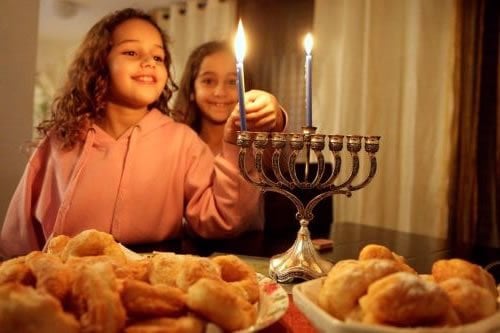
The Chanukah candles light up our home and the streets outside unto which they shine. This light is a preparation for Moshiach where the whole world will bask in the great holy light of G-dliness. By lighting out small menorah at home, we are getting the world ready for redemption.
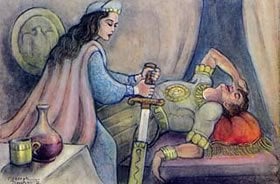
Yehudit Changes History
The story takes place in the town of Bethulia, which is under siege by the Assyrian general Holofernes and his army. The townspeople are struggling to survive due to the lack of food and water, and they're on the verge of surrendering. Yehudit, a beautiful and devout widow, steps forward and proposes a plan to save the town. She convinces the town leaders to let her go to the Assyrian camp, where she gains the trust of Holofernes by pretending to have information about the Jews' plans.
Yehudit’s true intention is to find a way to save her people, and she uses her charm and intelligence to get close to Holofernes. She eventually gets him drunk and beheads him, then returns to Bethulia with his head as proof. The Jews are then able to launch a surprise attack on the Assyrian army, which is thrown into chaos and ultimately defeated.
The story of Yehudit is often seen as a celebration of bravery, faith, and cleverness, and it has been depicted in many works of art and literature throughout history. It's a powerful story about the ability of one person to make a difference and save their community through courage and determination.
According to some, this incident took place during the Chanukah story. Because she used wine and cheese to get Holofornes drunk, we have the custom to eat dairy on Chanukah.